
- russian
- luganda
- maithili
- maori
- marathi
- norwegian
- oromo
- persian
- polish
- portuguese
- quechua
- korean
- shona
- sindhi
- singapore
- spanish
- tamil
- thai
- turkish
- ukrainian
- urdu
- vietnamese
- english
- arabic
- aymara
- basque
- belarusian
- bengali
- cebuano
- czech
- danish
- deutsch
- dutch
- afrikaans
- filipino
- finnish
- french
- galician
- hindi
- indonesian
- irish
- italian
- japanese

Comprehensive Guide to A633 Steel Properties Applications and Grades
Understanding A633 Steel: Properties, Applications & More
A633 steel is a high-strength, low-alloy structural steel widely used in various construction and engineering applications. Known for its excellent weldability and formability, it’s a preferred choice for projects demanding both durability and cost-effectiveness. This article delves into the properties, grades, applications, and benefits of A633 steel, providing a comprehensive overview for engineers, architects, and anyone involved in steel procurement. Understanding the nuances of A633 steel is crucial for ensuring the success and longevity of your projects.

Key Properties of A633 Steel
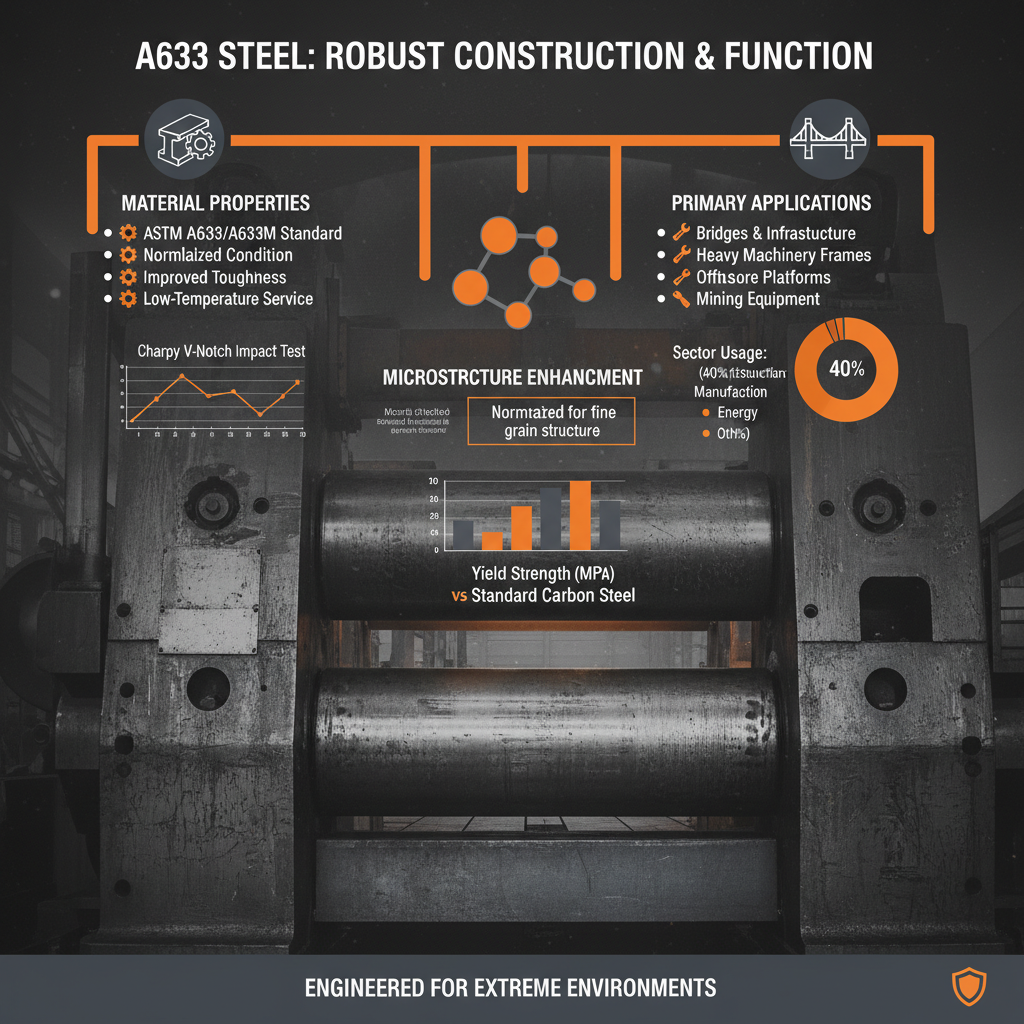
A633 steel’s desirable properties stem from its chemical composition, which includes carefully controlled amounts of carbon, manganese, silicon, and other alloying elements. Key characteristics include high yield strength, excellent toughness, good weldability, and resistance to atmospheric corrosion. Its relatively low carbon content minimizes the risk of cracking during welding, and the addition of alloying elements enhances its mechanical properties. This makes it a versatile material suitable for a broad range of structural applications. A633 is available in different grades based on specified minimum yield strength and other characteristics.
Key Highlights: High yield strength, excellent toughness, good weldability, and resistance to atmospheric corrosion.
A633 Steel Grades and Their Applications
A633 steel comes in several grades, each designed for specific applications and load requirements. The most common grades include A633 Grade A, Grade B, and Grade D. Each grade differs in its minimum yield strength. Understanding these differences is critical for selecting the appropriate material for your project. For example, Grade D offers the highest strength and is often used in structures requiring greater load-bearing capacity. Houndafloor provides A633 in various grades, tailored to specific project needs.
A633 Steel Grade Comparison:
• Grade A: Minimum yield strength of 36 ksi (248 MPa)
• Grade B: Minimum yield strength of 50 ksi (345 MPa)
• Grade D: Minimum yield strength of 65 ksi (448 MPa)
Common Applications of A633 Steel
Due to its versatile properties, A633 steel is employed in a diverse range of applications. These include structural components in bridges, buildings, and highway infrastructure. It's commonly used in the fabrication of wide-flange beams, channels, angles, and plates. Its excellent weldability makes it ideal for complex structural assemblies. Moreover, A633 steel is frequently used in the construction of storage tanks, pressure vessels, and other equipment subject to significant stresses. The demand for A633 steel remains high due to its reliability and cost-effectiveness.
Advantages of Choosing A633 Steel
Selecting A633 steel offers several advantages. Its high strength-to-weight ratio allows for efficient design and reduced material costs. Its excellent weldability simplifies fabrication processes, reducing labor and project timelines. Furthermore, the availability of various grades ensures that the optimal material is chosen for specific load requirements. By partnering with a reliable supplier like Houndafloor, you can ensure consistent quality and timely delivery.
Ensuring Quality and Compliance with A633 Standards
A633 steel must meet stringent quality control standards set by ASTM International. These standards cover chemical composition, mechanical properties, and welding requirements. Reputable suppliers like Houndafloor provide mill test reports (MTRs) verifying compliance with these standards. It's crucial to verify these documents to ensure that the material meets project specifications. Proper handling and storage are also essential to maintain the quality and integrity of the steel.
Conclusion: A Reliable Material for Diverse Applications
A633 steel is a dependable and versatile material that continues to be a cornerstone in modern construction and engineering. Its combination of strength, weldability, and cost-effectiveness makes it an ideal choice for a wide array of projects. By understanding its properties, grades, and applications, and by sourcing from a trusted supplier like Houndafloor, you can ensure the success and longevity of your structures.
Frequently Asked Questions (FAQs)
What is the difference between A633 Grade A and Grade B steel?
The primary difference lies in their minimum yield strength. A633 Grade A has a minimum yield strength of 36 ksi (248 MPa), while A633 Grade B boasts a higher minimum yield strength of 50 ksi (345 MPa). This means Grade B steel is stronger and can withstand higher loads. Grade B is typically used in applications requiring greater structural integrity, while Grade A is suitable for less demanding applications. The cost of Grade B is generally higher due to its enhanced strength.
Can A633 steel be used in corrosive environments?
While A633 steel possesses some resistance to atmospheric corrosion, it's not ideal for highly corrosive environments. In such cases, it's recommended to use corrosion-resistant steel alloys like weathering steel (A588) or apply protective coatings such as galvanizing or painting. These coatings provide an additional barrier against corrosion and extend the lifespan of the steel structure. Proper maintenance and inspection are also crucial in corrosive environments.
What are the welding considerations for A633 steel?
A633 steel is generally considered weldable using standard welding procedures. However, preheating may be required for thicker sections or in colder temperatures to prevent cracking. The appropriate welding process and electrode selection depend on the specific grade of A633 steel and the application. It is crucial to follow the recommendations outlined in AWS (American Welding Society) standards to ensure a strong and reliable weld. Always obtain the MTR for the specific batch of steel being welded.
Where can I find reliable suppliers of A633 steel?
Finding a reputable supplier is paramount to ensure quality and compliance. Houndafloor is a trusted supplier of A633 steel, offering a wide range of grades and sizes. Look for suppliers who provide mill test reports (MTRs), adhere to industry standards, and offer excellent customer service.


-

Premium China herringbone wood floor Technical Selection Guide The herringbone pattern has long been a symbol of architectural sophistication, characterized by its distinctive V-shape that adds dynamic movement and depth to any interior. When sourcing a China herringbone wood floor, professional buyers must look beyond the visual appeal to evaluate the structural integrity, material stability, and manufacturing precision that ensure long-term performance in diverse climates. In the current B2B landscape, the demand for patterned flooring is shifting toward hybrid solutions that combine the timeless look of natural timber with advanced composite technologies. This evolution is driven by the need for increased durability in high-traffic commercial zones Read More >26 Nov, 05
-

Waterproof China floating floorboards for Commercial Use Selecting a flooring solution that balances high-end architectural aesthetics with rigorous daily performance is a primary challenge for modern interior designers and commercial contractors. For those seeking the elegance of a herringbone layout without the instability of traditional hardwood, waterproof laminate options provide a strategic alternative. These engineered surfaces utilize a floating installation method, allowing the floor to expand and contract naturally without the need for permanent adhesives. By integrating a robust, waterproof HDF core with advanced wear layers, China floating floorboards offer a versatile solution for environments ranging from quiet residential bedrooms to high-traffic urban cafes. Read More >26 Nov, 02
-

Luxury Solid Wood Flooring: Answers for Material, Finish and Ordering Questions This FAQ explains the wood species, thicknesses, finishes, installation formats, moisture content, applications, and customization options available for luxury solid wood flooring from SHENYANG HOUNDA FLOOR PROCESSING CO.LIMITED. Read More >26 Nov, 02
-

Premium Quality China white oak stair treads for Luxury Stairs White oak is widely regarded as the gold standard for luxury staircases due to its exceptional hardness, tight grain structure, and timeless aesthetic. Selecting high-quality treads requires a deep understanding of both the botanical properties of the wood and the industrial precision used in their manufacture. This guide examines the technical requirements and sourcing considerations for professionals seeking premium staircase solutions. In the B2B procurement landscape, the challenge lies in balancing visual consistency with structural integrity. For contractors and designers, China white oak stair treads offer a strategic combination of European-grade precision and scaled manufacturing efficiency. Read More >26 Oct, 29
If you are interested in our products, you can choose to leave your information here, and we will be in touch with you shortly.


