
- russian
- luganda
- maithili
- maori
- marathi
- norwegian
- oromo
- persian
- polish
- portuguese
- quechua
- korean
- shona
- sindhi
- singapore
- spanish
- tamil
- thai
- turkish
- ukrainian
- urdu
- vietnamese
- english
- arabic
- aymara
- basque
- belarusian
- bengali
- cebuano
- czech
- danish
- deutsch
- dutch
- afrikaans
- filipino
- finnish
- french
- galician
- hindi
- indonesian
- irish
- italian
- japanese

Sourcing flooring from overseas often leads to a primary point of confusion: how to accurately evaluate the China wood flooring cost without sacrificing quality for a lower price tag. For international buyers, the price gap between different Chinese manufacturers is rarely about the materials alone, but rather a reflection of the engineering standards and the production scale utilized.
The market has shifted from providing generic, low-cost planks to offering high-performance engineered solutions. Today, the cost is heavily influenced by specific technical variables—such as the AC abrasion class, the waterproof core composition, and the precision of the locking systems—which determine the long-term return on investment for residential and commercial projects.
To navigate this complex pricing landscape, buyers must look beyond the initial per-square-meter quote and analyze the technical specifications that drive value. This guide examines the factors influencing cost and provides a framework for selecting flooring that balances budget optimization with structural longevity.

The Economics of Flooring Production

The variance in China wood flooring cost is often rooted in the level of automation and the precision of the machinery used. Direct manufacturers who invest in German-engineered equipment, such as those from Weinig or Leitz, can achieve tighter tolerances in plank dimensions and more uniform UV coating. This reduces material waste and ensures that the locking mechanisms fit perfectly, which in turn lowers the overall installation cost for the end user.
Furthermore, the vertical integration of the supply chain allows manufacturers to control the quality of the HDF (High-Density Fiberboard) core and the decoration layers. By managing the process from raw material selection to final packaging, companies can optimize costs without compromising the structural integrity of the waterproof core, providing a more competitive price point for high-volume international distributors.
Technical Drivers of Material Cost
One of the most significant cost drivers is the Wear Resistance rating, known as the AC (Abrasion Class) rating. AC3 flooring is designed for residential bedrooms and is the most budget-friendly option. However, as the rating increases to AC4 or AC5, the thickness and composition of the aluminum oxide wear layer increase, making the product suitable for heavy commercial traffic. This upgrade in durability directly impacts the per-unit cost but significantly extends the floor's lifespan in high-traffic areas.
Another critical factor is the core's water resistance. Standard laminate is prone to swelling when exposed to moisture, but a "True Waterproof" HDF core involves advanced resin technology and specialized pressing techniques. This engineering allows the flooring to be installed in kitchens and bathrooms, adding a premium to the cost but removing the need for more expensive materials like solid stone or porcelain tile in those zones.
Finally, the overall thickness—ranging from 8mm to 12mm—influences both the material cost and the perceived value. A 12mm plank offers superior structural stability and better acoustic insulation (sound dampening) compared to an 8mm plank. For luxury residential projects or large commercial lobbies, the increased cost of 12mm flooring is often justified by the "solid" feel underfoot and the reduced likelihood of floor deflection.
Balancing Aesthetics and Performance
Visual depth is no longer achieved through simple printing. Modern luxury flooring utilizes EIR (Embossed-in-Register) technology, where the physical texture of the wood grain is perfectly aligned with the printed image. While this requires more sophisticated molds and slower production speeds, it creates a 3D effect that mimics genuine hardwood, allowing buyers to achieve a luxury aesthetic at a fraction of the cost of solid wood.
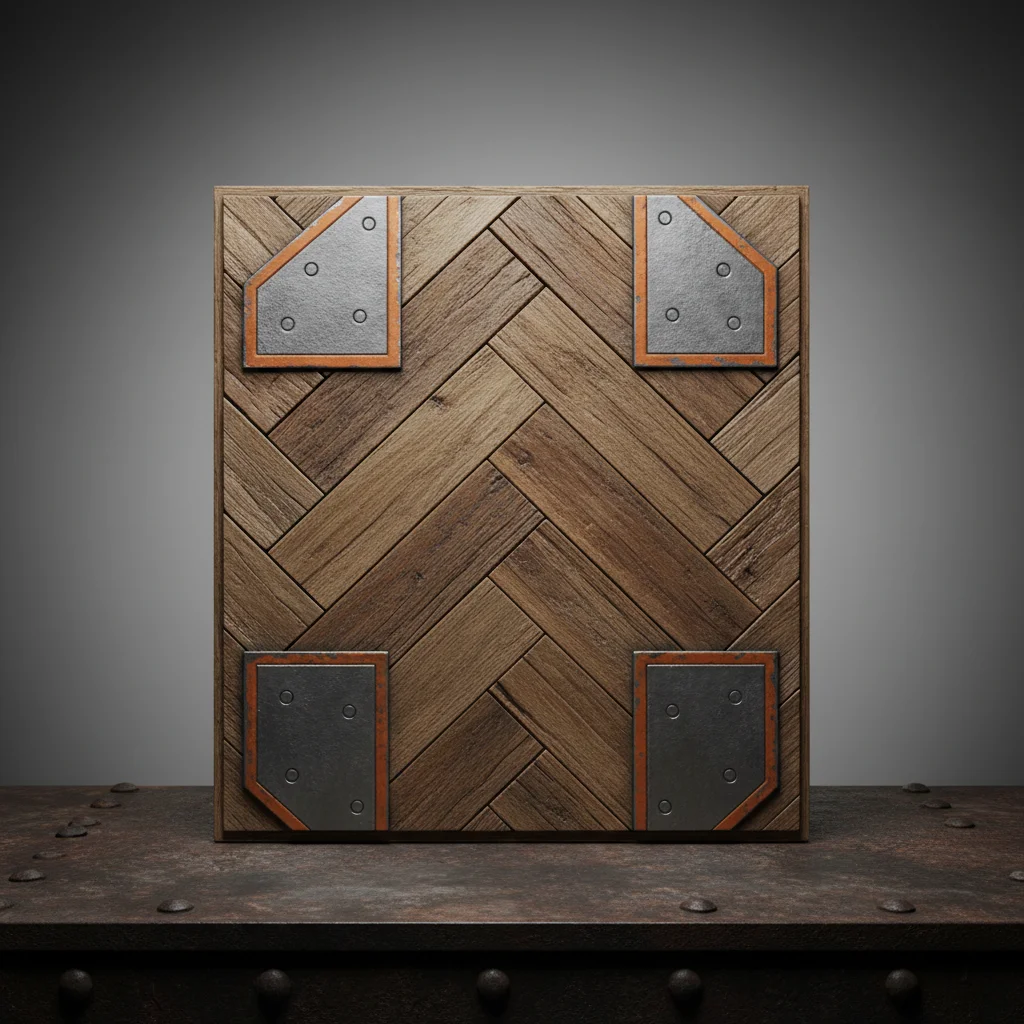
The value of premium flooring lies in the intersection of architectural style and industrial durability; high-end aesthetics like herringbone patterns must be supported by a waterproof core and AC5 durability to ensure a high ROI in commercial settings.
Beyond the surface, edge design also plays a role in both cost and appearance. U-groove and V-groove edges create subtle shadow lines that define each plank, enhancing the 3D visual appeal. When combined with a precise Click-Lock system, these design choices reduce labor costs during installation, as the planks can be secured quickly and stably without the need for extensive adhesives.
Cost vs. Durability Index
When evaluating the China wood flooring cost, it is helpful to view the relationship between the price point and the expected durability. Budget-friendly options typically offer lower AC ratings and standard thickness, whereas premium solutions integrate waterproof cores and higher wear resistance.
The following index illustrates the relative value increase as a product moves from basic residential specs to high-traffic commercial specifications. This helps procurement managers determine if they are overpaying for unnecessary specs or under-specifying for their specific environment.
Figure 2. Relative Value Index by Specification Level
Commercial Application Considerations
In high-intensity environments such as boutique hotels, retail shops, or urban cafés, the priority shifts from initial purchase cost to the cost of ownership. A lower-cost AC3 floor may seem attractive initially, but the frequent replacement required due to wear and tear in a commercial setting leads to higher long-term expenses and operational downtime.
For these scenarios, selecting a waterproof laminate with an AC5 rating and 12mm thickness is a strategic investment. The ability to withstand moisture spills and heavy foot traffic ensures the flooring remains pristine for years, providing a stable return on investment through extended lifespan and reduced maintenance costs.
Future Trends in Manufacturing Efficiency
The industry is moving toward "Smart Manufacturing," where digital printing and automated quality control reduce the margin of error. Digital printing allows for more complex and realistic patterns without the need for expensive physical plates, potentially lowering the cost of bespoke designs for large-scale projects.
Sustainability is also becoming a cost driver. The shift toward eco-friendly resins and sustainably sourced wood fibers is increasing the demand for certified production lines. While the initial transition to sustainable materials can increase production costs, it opens access to premium markets in Europe and North America where green certifications are mandatory.
Furthermore, the integration of anti-bacterial surface treatments and Harmony Matt finishes represents the next wave of value-added features. These enhancements target the health-conscious residential and healthcare sectors, shifting the competition from price-per-square-meter to a focus on overall wellness and air quality in the interior environment.
Strategic Selection Framework
To optimize the procurement process, buyers should utilize a decision matrix based on their specific project needs. Selecting the wrong specification—either over-specifying for a low-traffic bedroom or under-specifying for a commercial lobby—leads to inefficient budget allocation.
The trade-off between thickness and wear rating is the most common point of decision. While a thinner plank with a high AC rating may be durable, it lacks the sound insulation of a thicker plank. Conversely, a thick plank with a low AC rating will feel solid but will scratch easily.
The following table provides a relative suitability guide to help you align your project requirements with the appropriate technical specifications, ensuring you get the best performance for your budget.
| Project Type | Recommended AC | Ideal Thickness | Core Requirement |
|---|---|---|---|
| Residential Bedroom | AC3 | 8.0 mm | Standard HDF |
| Residential Living Room | AC3 / AC4 | 10.0 mm | Moisture Resistant |
| Kitchen/Bathroom | AC4 | 10.0 mm | True Waterproof |
| Boutique Retail | AC4 / AC5 | 12.0 mm | True Waterproof |
| Office Lobby | AC5 | 12.0 mm | High Density HDF |
| Urban Café/Bistro | AC5 | 12.0 mm | True Waterproof |
Questions & Answers
The AC (Abrasion Class) rating measures the wear resistance of the overlay layer. AC3 is designed for light residential use, such as bedrooms, where foot traffic is minimal. AC5 is engineered for heavy commercial environments, such as retail stores or office lobbies, where high-intensity foot traffic and abrasion are constant. The higher the AC rating, the thicker and more durable the protective aluminum oxide layer, which increases the product's cost but prevents surface scratches and wear over time.
Yes, provided the product features a true waterproof HDF core. Unlike standard laminate, which is only moisture-resistant on the surface, waterproof laminate is engineered with specialized resins that prevent the core from swelling when exposed to water. This makes it a viable and cost-effective alternative to tile in bathrooms and kitchens. However, it is still recommended to use proper sealing around the perimeter of the room to prevent water from seeping under the entire floating floor system.
EIR (Embossed-in-Register) technology aligns the physical texture of the wood grain perfectly with the printed image. This creates a realistic 3D effect that looks and feels like genuine hardwood. While EIR increases the manufacturing cost due to the precision molds required and slower production cycles, it significantly elevates the aesthetic value of the space. It allows buyers to achieve a luxury architectural look without the high cost and maintenance requirements of solid wood flooring.
A 12mm plank provides significantly more structural stability and a more substantial feel underfoot compared to an 8mm plank. In commercial settings, thicker flooring is less prone to deflection (bending) under heavy loads and offers superior sound insulation, reducing the noise of footsteps in large open spaces. While the material cost is higher, the increased stability and acoustic performance reduce the need for additional underlayment and extend the overall lifecycle of the installation.
Sourcing directly from a manufacturer eliminates middleman markups and allows for tighter control over specifications. Direct manufacturers can offer tailored solutions, such as customizing the AC rating or thickness to match the specific needs of a project, ensuring that the buyer does not pay for unnecessary features. Additionally, factory-direct supply chains provide better consistency in quality and more reliable delivery schedules for large-scale construction projects, which reduces the risk of costly project delays.
Traditionally, herringbone patterns required more labor and specialized adhesives. However, modern precision Click-Lock systems have simplified this process. While the layout is more complex and requires more careful planning than standard planks, the integrated locking mechanism allows for a secure floating installation. This reduces the reliance on expensive professional glues and significantly cuts down installation time, making the high-end architectural look of herringbone more accessible and affordable for both commercial and residential budgets.
Final Thoughts
Understanding the drivers behind the China wood flooring cost is essential for any buyer seeking to balance upfront expenditure with long-term performance. The true value of flooring is found not in the lowest price per square meter, but in the alignment of technical specifications—such as the AC rating, core waterproofness, and thickness—with the actual demands of the environment.
By prioritizing engineering standards and sourcing from manufacturers who utilize high-precision automation, project managers and homeowners can secure a floor that offers both architectural luxury and industrial-grade durability. Investing in the right specifications today prevents the costly cycle of premature replacement and ensures a sustainable, high-performing interior for years to come.



Jason Wright
If you are interested in our products, you can choose to leave your information here, and we will be in touch with you shortly.


