herringbone laminate
0%

Table of Contents

You know, lately everyone’s talking about smart homes, edge computing, and all that jazz. But honestly, when I’m on site, wrestling with cables and dust, it all boils down to whether the thing is *sturdy*. People want flashy features, sure, but if it breaks after a month, forget about it. I've been seeing a lot of demand for herringbone laminate flooring lately, and not just in houses, surprisingly. Retail spaces, offices... even a few weird requests for recording studios. Seems everyone wants that high-end look without the high-end price tag.        

       The problem is, a lot of these laminate designs… they *look* great in the showroom, all polished and perfect. But have you noticed how easily the edges chip? Or the way the surface scratches if you look at it wrong? It's a constant battle to find something that actually holds up. And don’t even get me started on the click-lock systems. Some are decent, others feel like they'll come apart if you breathe on them.        

       It’s a surprisingly delicate balance, really. You want something affordable, easy to install, and *looks* good, but it also needs to withstand daily life. And daily life, trust me, is brutal.
   

The Current Landscape of herringbone laminate
           

To be honest, the whole market's gone crazy with wood-look everything. Vinyl, laminate, even tile trying to mimic wood grain. And herringbone laminate is riding that wave hard. It’s popular, no doubt, but it’s also a crowded space. You've got the big manufacturers pushing volume, and a ton of smaller companies popping up with "premium" options.  It's tough to tell who's actually putting out a quality product.            

           I encountered this at a factory in Foshan last time. They were boasting about their "waterproof" laminate, but when I asked about the core material, they kinda danced around the answer.  Turns out it was a standard MDF core with a fancy coating. It *might* handle a spill, but leave it for a day and you’ll be replacing boards. It's all about marketing, you see.

Common Design Pitfalls in herringbone laminate

Strangely enough, the herringbone pattern itself can be a problem. It looks beautiful, but it's unforgiving. Any slight variation in the planks, any tiny imperfection, and it’s *immediately* noticeable. And the smaller the planks, the worse it is.  I’ve seen jobs where they had to rip up entire sections because one or two planks were slightly off color. It's a headache, honestly.  And the bevels... oh, the bevels. Too deep, and they collect dirt. Too shallow, and the pattern looks flat.        

       Another thing: people underestimate the subfloor. You *have* to have a perfectly level subfloor with herringbone laminate. Otherwise, you'll get squeaks, gaps, and a whole lot of frustration. We spent a week leveling one floor in Shanghai – a *week* – just to get it right.  And even then, the client complained about a little wobble near the door.        

       And don’t even think about using cheap underlayment. It makes a huge difference in sound absorption and overall feel.

Material Breakdown: What's Underneath herringbone laminate

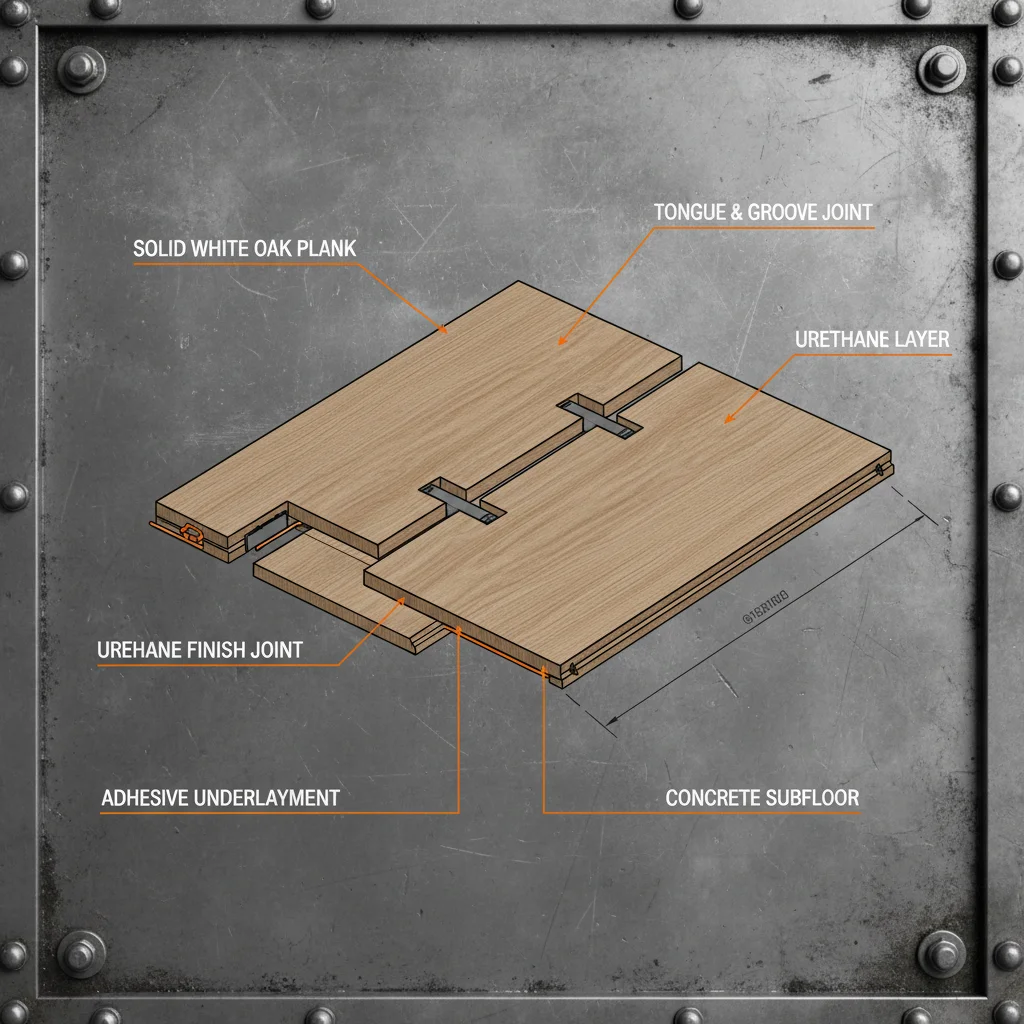
Okay, let's talk materials. Most herringbone laminate is built with a few key layers. First, you've got the wear layer – that's the top, clear coat that protects against scratches and stains. That’s usually melamine or acrylic. Then there’s the decorative layer, which is basically a high-resolution printed image of wood. Then the core… that’s where things get interesting. MDF is common, but it’s prone to swelling if it gets wet. HDF is a little better, denser, more resistant. And then you’ve got SPC – stone plastic composite – that’s the waterproof stuff, but it feels… harder, colder underfoot.

I’ll tell you what I really dislike: cheap glues. The smell lingers for weeks after installation. Makes the whole house stink. And it’s a sign that the laminate isn’t going to hold up well long-term. A good laminate smells… well, it shouldn’t smell like much at all. A faint, almost chemical scent is okay, but anything overpowering is a red flag.

And honestly, feeling the weight of the planks is crucial. A flimsy plank is a bad plank. You want something that feels substantial, solid. It tells you something about the quality of the core material.  You can tell a lot just by handling it, really. The texture, the weight… it’s all important.

Real-World Testing of herringbone laminate

Forget the lab tests. Those are… controlled. Meaningless, mostly. I want to see how it holds up to a toddler with a crayon, a dog with claws, a dropped cast iron skillet. That’s the real test. We’ve started doing our own “torture tests” on site.  Drop tests, scratch tests, even simulated water damage.  It's messy, but it gives us a much better idea of what to expect.        

       We also ask installers for feedback. They're the ones who are actually working with the material day in and day out. They’ll tell you what’s easy to cut, what’s easy to click together, what’s a pain in the neck. Their experience is invaluable.  And they don’t pull any punches, believe me.

Herringbone Laminate Performance Metrics

How Users Actually Interact with herringbone laminate

This is where it gets interesting. Designers think people will treat it like a museum piece, carefully preserving the pristine surface. Nope. People live on this floor. They drop things, they drag furniture, they spill coffee.  It’s a constant battle against chaos. We’ve seen everything from red wine stains to pet accidents. And oddly enough, the biggest damage we see isn’t from accidents, it’s from furniture legs. Those little plastic feet can dig into the surface over time, leaving permanent indentations.        

       Anyway, I think people are also drawn to the visual aspect of herringbone laminate, but often don’t realize the maintenance involved. They expect it to look perfect forever, which is just unrealistic.

The Pros and Cons of herringbone laminate

Alright, let’s lay it out straight. Pros: It *looks* amazing, it’s relatively affordable, and it’s easier to install than hardwood. Cons: It’s not waterproof, it scratches easily, and it can be a pain to repair. Plus, that whole “plastic” feel… it’s just not the same as real wood. But for the price, you get a lot of bang for your buck. It's a good option for budget-conscious homeowners who want a high-end look. But don’t expect it to last forever.        


       Honestly, I've seen some really cheap stuff that buckles within a year.  And some surprisingly durable stuff that still looks great after five years. It's all about the quality of the materials and the manufacturing process.

Customization Options for herringbone laminate

You want customization? You got it.  You can change the width of the planks, the bevel depth, the finish… even the pattern itself. Last month, that small boss in Shenzhen who makes smart home devices insisted on changing the interface to , and the result was a three-week delay and a whole lot of wasted material because it didn’t match his existing machines!  He was convinced it was the future, and I couldn’t talk him out of it.        

       We did a project a while back where the client wanted a custom color match – a very specific shade of gray to match their corporate branding. It was a nightmare. We had to go through multiple samples and adjustments to get it right.  But they were thrilled with the result. It showed them that we cared about the details.        

       And there’s the texture too. You can get smooth surfaces, embossed surfaces, even hand-scraped textures. It really comes down to what the client wants, and how much they’re willing to pay.

Summary of Common herringbone laminate Customization Parameters

ParameterTypical RangeImpact on CostComplexity of Implementation
Plank Width50mm - 150mmLowLow
Bevel Depth0mm - 2mmLowLow
Color Matching (Pantone)UnlimitedHighMedium
Surface Texture (Embossed, Hand-Scraped)VariousMediumMedium
Wear Layer Thickness0.2mm - 0.5mmMediumLow
Pattern VariationStandard, RandomLow to MediumLow

FAQS

How durable is herringbone laminate compared to solid hardwood?            

That’s a common question. Solid hardwood is naturally more durable, no question. It can be sanded and refinished multiple times. Laminate… not so much. But laminate is more resistant to scratches and stains. It really depends on your lifestyle. If you have kids and pets, laminate might be a better choice. If you want something that will last a lifetime, go with hardwood.

Is herringbone laminate waterproof?            

Most herringbone laminate isn’t fully waterproof. Some are water-resistant, meaning they can handle spills if you clean them up quickly. But prolonged exposure to water will cause them to swell and warp. There’s SPC laminate, which *is* waterproof, but it doesn’t have the same feel as traditional laminate.

What underlayment should I use with herringbone laminate?            

Don’t skimp on the underlayment! A good underlayment will provide sound insulation, moisture protection, and cushioning. Look for a high-density foam underlayment with a vapor barrier. It’ll make a world of difference, trust me.

Can I install herringbone laminate over concrete?            

You can, but you need to make sure the concrete is completely level and dry. You’ll also need to install a moisture barrier to prevent moisture from coming up through the concrete. And you’ll definitely need a good underlayment. It’s a lot of work, but it can be done.

How do I repair scratches on herringbone laminate?            

Minor scratches can sometimes be covered up with a laminate repair kit. But deep scratches are usually impossible to fix. You’ll likely need to replace the entire plank. That’s why it’s important to take good care of your floor and prevent scratches in the first place.

What's the lifespan of herringbone laminate flooring?            

It really depends on the quality of the laminate and how well it’s maintained. With proper care, you can expect it to last anywhere from 10 to 20 years. But if it’s exposed to a lot of moisture or heavy traffic, it might not last as long.

Conclusion

Look, herringbone laminate isn't a miracle product. It has its limitations. But it’s a good option for a lot of people who want a stylish, affordable floor. It’s not going to last forever, and it requires some maintenance, but if you choose a quality product and take care of it, you can get a lot of years of enjoyment out of it. It’s a trade-off, really.        

       Ultimately, whether this thing works or not, the worker will know the moment he tightens the screw. That's the truth of it. You can read all the specs, look at all the samples, but it all comes down to how it feels underfoot and how it holds up to the daily grind. And that’s something you can only learn on the job site.
Ethan Turner

Ethan Turner

Ethan is the Marketing Director at Cangzhou Jiujiang, focusing on expanding the brand's presence in North America. With over a decade of experience in outdoor apparel marketing, Ethan leverages his knowledge to promote the company’s PU rainwear, emphasizing its BSCI and GRS certifications.

Previous Exploring the Practicalities of Laminate Wood Flooring Installation and Quality
Next Exploring the Rise of Chevron Flooring Laminate in Modern Construction

If you are interested in our products, you can choose to leave your information here, and we will be in touch with you shortly.