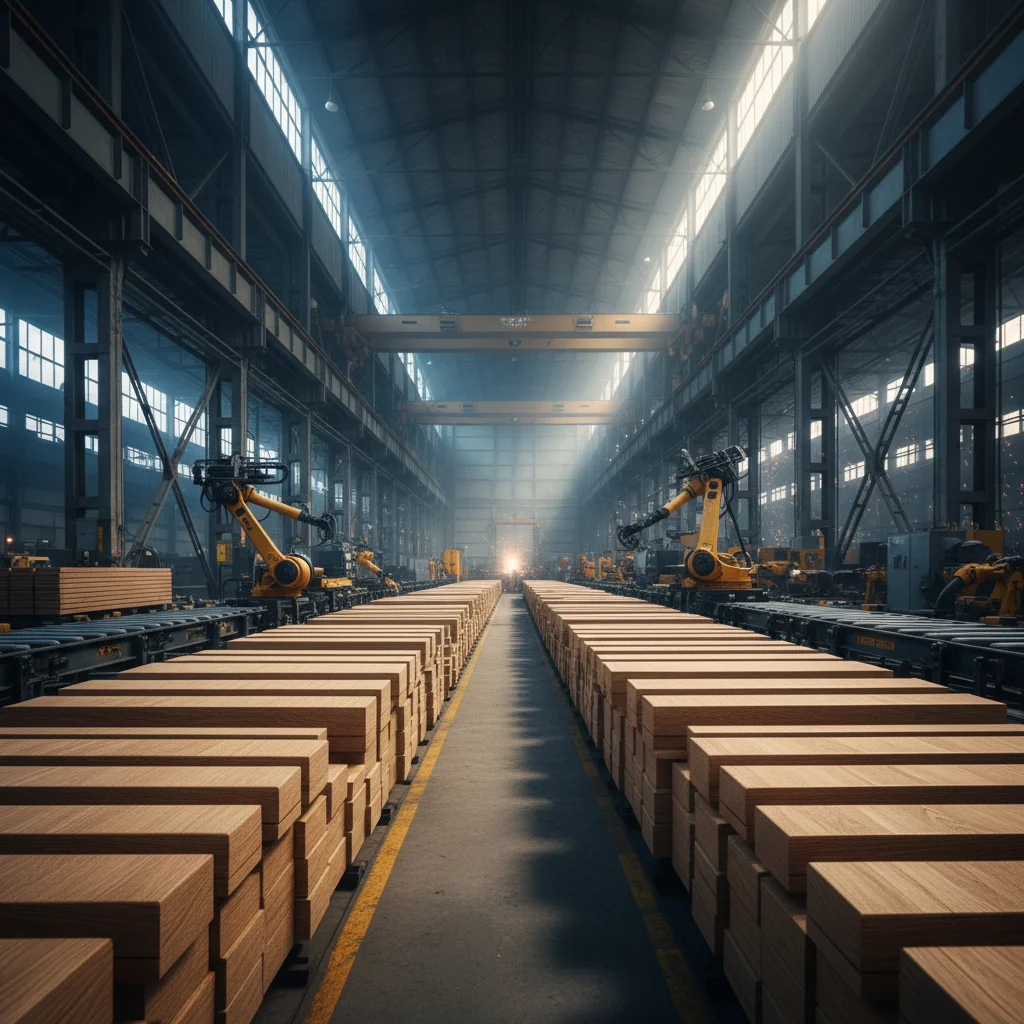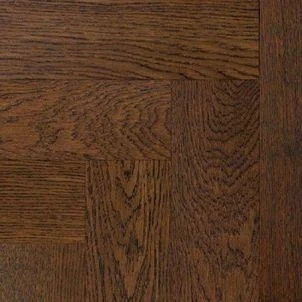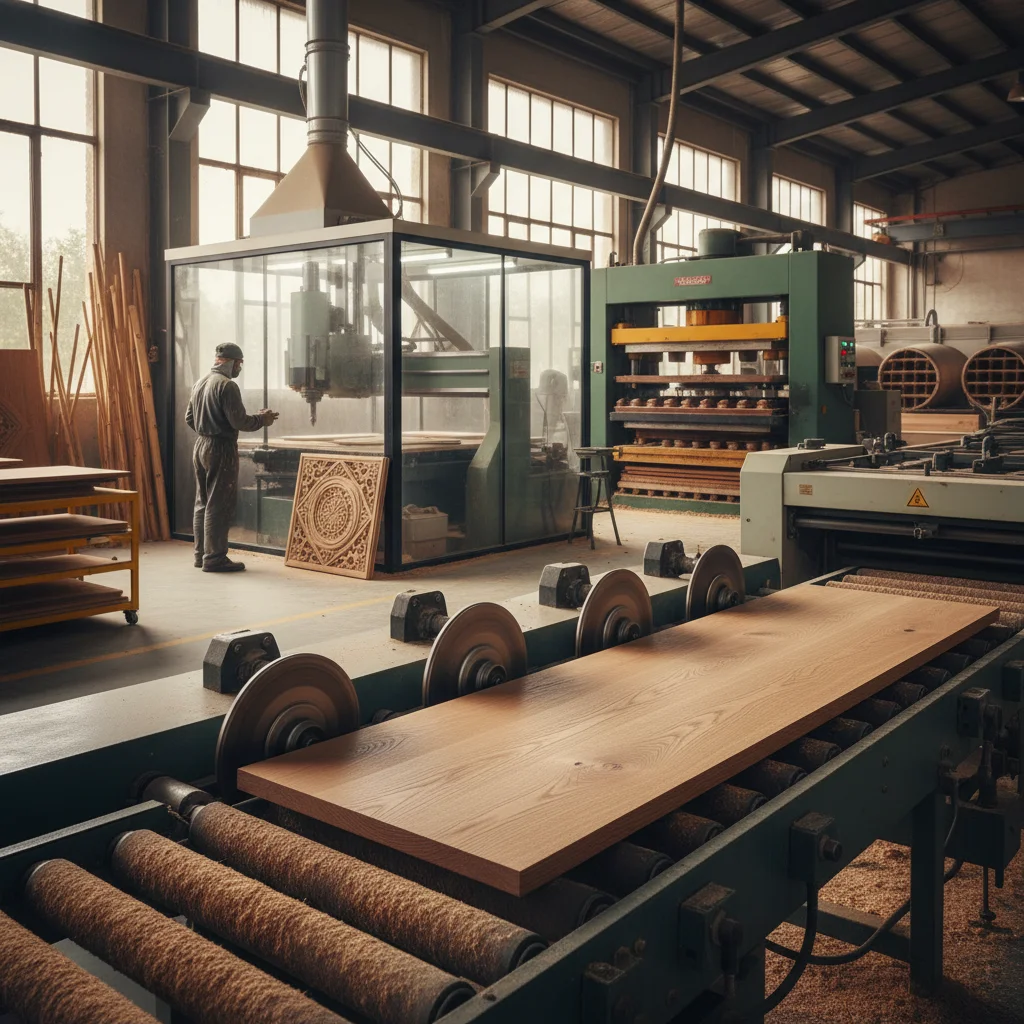
herringbone laminate
0%

Table of Contents

Honestly, the whole industry's gone crazy for pre-fab these days. Everyone's talking about speed, efficiency… but have you actually *been* on a site trying to slot these things together? It’s not always as smooth as the brochures make out. The pressure to deliver faster means corners get cut, details get missed. It’s a bit worrying, actually.        

       And the designs… so many architects dreaming up beautiful things without a clue about how it’s actually *made*.  I encountered this at a factory in Foshan last time, they’d designed this ridiculously complex corner joint, looked gorgeous in the CAD drawing, but utterly impossible to weld consistently. Spent a whole day arguing with the engineer about it.        

       We’re mainly working with high-density fiberboard, MDF, and a decent laminate surface. It's surprisingly weighty stuff, you know?  The MDF has this distinct smell, sort of like sawdust and… well, glue.  Good quality stuff feels solid, a bit cool to the touch. Cheap stuff?  It crumbles if you look at it sideways. We get a lot of requests for different finishes – woodgrain is still popular, but marble effect is making a comeback, strangely.
   
Table of Contents [Hide]        

The Current Landscape of Laminate Wood Flooring
           

To be honest, it’s all about cost right now. Everyone wants something that *looks* good, but nobody wants to pay for it. That’s why laminate's so popular. It’s a compromise, really. It gives you the aesthetic without breaking the bank.  You're seeing a lot more realistic textures too, which is good.  People are starting to expect more than just a printed woodgrain.            

           But there's a lot of pressure on manufacturers to keep prices down.  And that’s where quality suffers.  You end up with thinner laminates, cheaper core materials, and less attention to detail.  It's a race to the bottom, unfortunately.

Design Pitfalls & Common Mistakes

The biggest mistake?  Underestimating the expansion and contraction.  Laminate *will* move with changes in temperature and humidity.  If you don't leave enough expansion gaps, it’ll buckle.  Guaranteed.  I’ve seen it happen countless times. It looks like a mountain range.        

       And then there’s the joint design.  Trying to get a seamless look is tempting, but it’s almost always a bad idea.  A small gap, properly concealed, is much better than a visible, uneven joint.  We've had clients demand perfectly flush joints and then complain when they start to separate in the winter.        

       Have you noticed how many designs try to mimic really complex wood patterns?  Think intricate herringbone or parquet.  It looks fantastic on the sample, but it’s a nightmare to manufacture and install without noticeable repeats.  Simpler designs are almost always more practical.

Core Materials & On-Site Handling

The core material is crucial. HDF is the standard, but the density varies massively. Lower density HDF swells up if it gets wet – even a little bit. High density is much more resistant, but also more expensive. There’s also a particleboard core, but that’s really for the budget stuff. It feels… flimsy.

On-site, you need to treat laminate with respect. It's not indestructible. Keep it dry, protect it from scratches, and acclimatize it to the room temperature for at least 48 hours before installation. Sounds obvious, right? You'd be surprised. I’ve seen entire pallets left outside in the rain. It’s a disaster.

The wear layer is another thing to check. That’s the transparent protective coating on top. Higher AC ratings (Abrasion Class) mean better resistance to scratches and wear. But don’t get fooled by the numbers.  Some manufacturers inflate the ratings.  I always do a scratch test myself, just to be sure.

Real-World Testing & Quality Control

Lab tests are fine, but they don’t tell the whole story.  I prefer to see how laminate holds up to real-world abuse. We have a little test area at the warehouse where we drop weights on it, drag sandpaper across it, and spill coffee on it. It’s not scientific, but it’s a good indicator of how it'll perform in a home.        

       We also have a water resistance test – we leave a puddle of water on a sample for 24 hours and see if it swells up or delaminates. It's pretty brutal, but it separates the good stuff from the bad.

Laminate Wood Flooring Performance Metrics

User Application & Unexpected Use Cases

People use laminate in all sorts of ways. Obviously, flooring is the main one. But we've had customers use it for wall panels, furniture surfaces, even temporary countertops. It’s surprisingly versatile.        

       What’s surprising is how many people try to use it in bathrooms. I always warn them against it. Unless it's specifically designed for wet areas, it’ll swell up and fall apart.  They never listen, though.

Advantages, Disadvantages & Customization

The big advantage is cost, obviously. It's significantly cheaper than hardwood or tile. It’s also relatively easy to install, especially the click-lock systems. And the designs have improved dramatically in recent years. It’s actually possible to find laminate that looks convincingly like real wood.        

       But it’s still plastic, let’s be real. It doesn’t feel the same underfoot, it doesn't age gracefully, and it’s not as durable as natural materials.  And you can’t refinish it. If it gets damaged, you have to replace it.        

       We do offer some customization options. We can source different colors, textures, and even custom prints. Last month, that small boss in Shenzhen who makes smart home devices insisted on changing the interface to , and the result was a delay of three weeks because they couldn’t find a supplier who could do it quickly. It's always something...

A Customer Story & Lessons Learned

Anyway, I think the key takeaway is this: laminate is a good option for certain applications, but it’s not a miracle material. It’s a compromise. You need to understand its limitations and use it appropriately.        

       And remember, the cheaper it is, the more likely it is to cause you problems down the line. It’s always better to spend a little more upfront and get a quality product.  I had a client, old Mr. Li, insisted on the cheapest stuff for his rental property. Called me six months later, complaining about buckling and peeling.  Told him I warned him.        

       I remember once, we were working on a big project in Shanghai, a shopping mall. The architect specified a really unusual color, a sort of teal green. It took months to find a supplier who could match it, and it cost a fortune. But the end result was stunning. It just goes to show, sometimes it's worth going the extra mile.

Summary of Key Laminate Wood Flooring Material Characteristics

Material TypeCost (USD/sqm)Durability Rating (1-10)Water Resistance
High-Density Fiberboard (HDF)8-157Low
Medium-Density Fiberboard (MDF)6-126Very Low
Particleboard4-84Extremely Low
Waterproof Laminate Core12-208High
AC3 Laminate (Standard)7-146Low
AC4 Laminate (High Traffic)10-188Medium

FAQS

What's the best way to clean laminate wood flooring?            

Honestly, keep it simple. A slightly damp mop with a pH-neutral cleaner is usually best. Avoid anything too abrasive or anything with a lot of water. Standing water is the enemy.  And for stubborn marks? A little bit of rubbing alcohol usually does the trick, but test it in an inconspicuous area first. Don't go overboard with the cleaning, though.  Too much moisture can cause warping.

How long does laminate flooring typically last?            

It depends, of course.  Cheap laminate might start looking worn after five years.  Good quality laminate, with a decent wear layer, can easily last 10-15 years, even with heavy foot traffic. But it's not forever. Eventually, it’ll scratch, fade, and maybe even delaminate. Think of it as a long-term investment, but not a lifetime one.

Is laminate flooring waterproof?            

Most laminate isn't truly waterproof, even if it's labeled as "water-resistant." It can withstand spills if you clean them up quickly, but prolonged exposure to water will cause it to swell and warp. There *is* waterproof laminate available, but it's more expensive.  And even then, I wouldn't recommend installing it in a bathroom unless it’s specifically designed for that purpose.

Can I install laminate flooring over concrete?            

Yes, but you need to make sure the concrete is level, clean, and dry.  Any moisture coming up from the concrete will ruin the laminate. You'll also need to use a moisture barrier. It’s extra work, but it’s essential. I've seen too many projects fail because people skipped that step.  Trust me, it's not worth the risk.

What should I look for when choosing a laminate flooring thickness?            

Thicker isn't always better, but generally, a thicker laminate will be more durable and feel more solid underfoot. 8mm is a good starting point for most residential applications. If you have heavy foot traffic or pets, you might want to go with 10mm or 12mm.  And don't forget to consider the underlayment. A good underlayment can add extra cushioning and sound insulation.

How does laminate wood flooring compare to vinyl flooring in terms of cost and durability?            

That's a good question. Vinyl is generally cheaper than laminate, but laminate often *looks* more realistic. In terms of durability, it depends on the quality of both materials. High-end vinyl can be very durable, but it can also be prone to scratches. Laminate is more resistant to scratches, but it’s more susceptible to water damage. It really comes down to your budget and your priorities.

Conclusion

Ultimately, laminate wood flooring is a pragmatic solution. It’s not a luxury, it’s a compromise. It offers a decent look and feel at a reasonable price, but it’s not without its limitations. You need to be realistic about what it can and can’t do.        

       But here’s the thing: no matter how much we talk about specs and ratings, the real test is how it holds up in the real world.  Whether this thing works or not, the worker will know the moment he tightens the screw. And that, frankly, is all that matters.

Ethan Turner

Ethan Turner

Ethan is the Marketing Director at Cangzhou Jiujiang, focusing on expanding the brand's presence in North America. With over a decade of experience in outdoor apparel marketing, Ethan leverages his knowledge to promote the company’s PU rainwear, emphasizing its BSCI and GRS certifications.

Previous Expert Insights on Solid Wood Flooring Installation and Material Selection
Next Navigating the Demand for Durable Herringbone Laminate Flooring Solutions

If you are interested in our products, you can choose to leave your information here, and we will be in touch with you shortly.