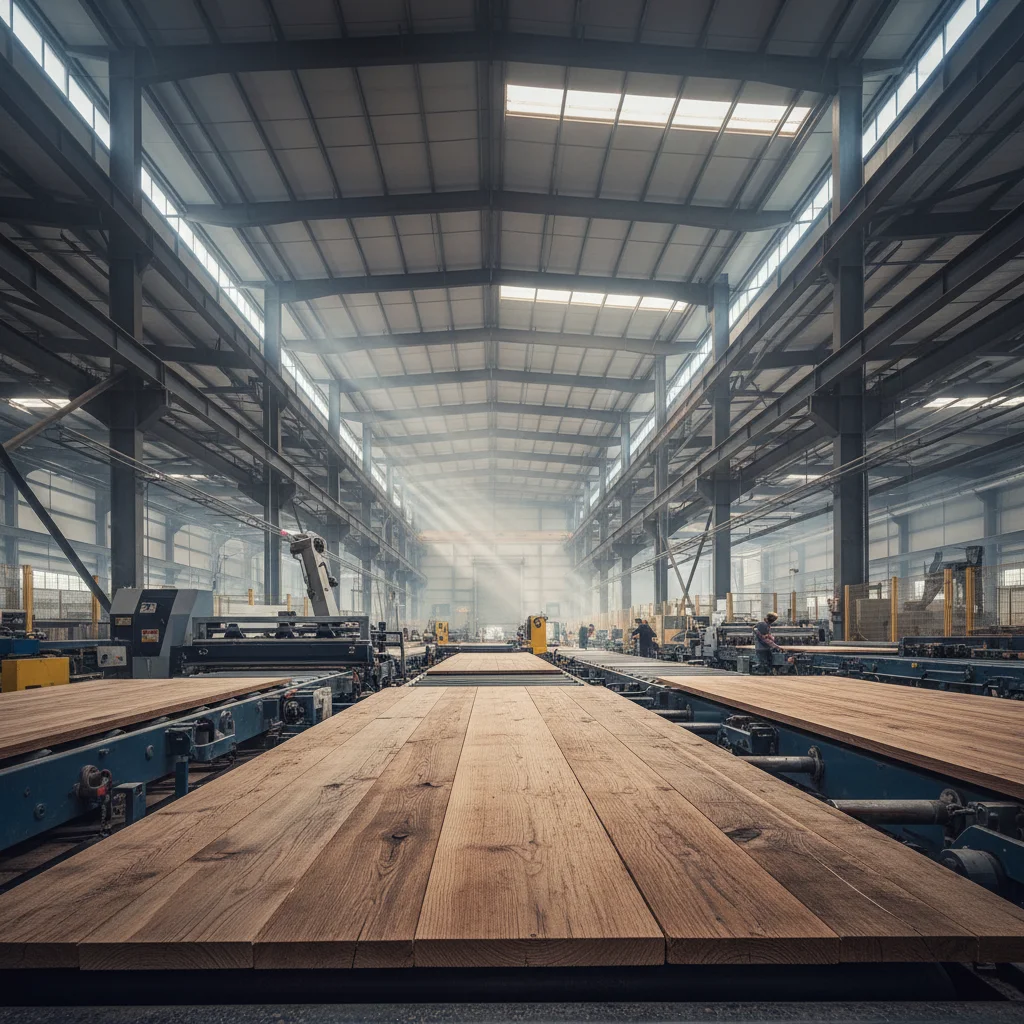
herringbone laminate
0%

Table of Contents

Look, I’ve been running around construction sites for fifteen years, and let me tell you, things are *moving*. Everyone’s talking about prefabrication, modular designs, minimizing waste… and chevron flooring laminate is right in the thick of it. It’s not new, not by a long shot, but people are finally realizing it’s a solid solution when you need something that looks good, holds up, and doesn’t take forever to install. Honestly, the demand just keeps climbing.        

       There's a real push for quicker turnaround times, you know? Owners don't want projects dragging on. Chevron laminate fits that bill. But a lot of designers, they get caught up in the *look* and forget about practicality. Have you noticed how many specify really thin wear layers? Beautiful for the showroom, a disaster on a busy site. Or they try to get too clever with the click-lock systems, and it becomes a nightmare to assemble.        

       And honestly, the material itself… it’s come a long way. It’s not your grandma’s laminate anymore. We’re talking high-density fiberboard, often with a limestone composite core. Feels solid, smells…well, like wood composite, I guess. Not offensive, not amazing. You need good gloves when handling it, though. That edge banding can be surprisingly sharp.
   

The Current Landscape of Chevron Flooring Laminate
           

To be honest, it’s booming. Prefab housing, retail spaces, even some high-end apartments are using it. It’s quick to install, relatively affordable, and the designs are getting better and better. You're seeing more realistic wood grain patterns, textured surfaces... it’s not always easy to tell the difference from solid wood anymore, especially with the improved printing technologies.            

           I encountered this at a flooring factory in Vietnam last time, and they were experimenting with adding recycled plastic to the core layer. Said it made it more water-resistant. I’m skeptical, but they seemed convinced. The whole industry is trying to figure out how to make things greener, you know?

Design Pitfalls and Common Mistakes

Strangely enough, the biggest problems aren't with the material itself, but with the design. People try to get too fancy. They specify really tight tolerances, or they want super-complex patterns that are a pain to cut and install.  Then you get callbacks because the floor’s buckling or the seams aren’t lining up. It’s always the little details.        

       And the underlayment! Don't even get me started. Using the wrong underlayment can make all the difference. Too thin, and it feels cheap and sounds hollow. Too thick, and it throws off the leveling and makes it harder to get a smooth install. I've seen entire projects delayed because of underlayment issues.        

       Another thing... gloss levels. A high-gloss chevron laminate? Looks amazing in a photograph, looks like a skating rink on a busy floor. People don't think about that.

Material Composition and On-Site Handling

Okay, so most of the chevron flooring laminate you’re going to find is made with a high-density fiberboard (HDF) core. That’s the main body of the plank. Then you’ve got the decorative layer – that’s the printed design that *looks* like wood. And then the wear layer on top, which is what protects it from scratches and dents. That’s where quality really matters.

Handling it on site... well, it’s basically cardboard. Treat it gently. Don't drag pallets across the concrete, don't leave it exposed to the rain. Moisture is the enemy. And wear gloves. Seriously, those edges can slice you up. We had a guy last year get a nasty cut trying to maneuver a stack of planks. It’s not glamorous work, but it’s important to be careful.

Some of the higher-end stuff uses a stone plastic composite (SPC) core. It’s heavier, more rigid, and *way* more waterproof. It feels different underfoot, more solid. And it’s a bit more forgiving if it gets wet, which is a big plus in bathrooms or kitchens.

Real-World Testing and Performance

Forget the lab tests. I care about what happens when a loaded forklift accidentally rolls over a plank, or when a plumber drops a wrench on it. Those are the real tests. We’ve had guys intentionally abuse samples – scratch them with keys, drop weights on them, spill coffee… you name it.        

       We also install small test sections in actual projects and see how they hold up over time.  The wear layer is the first thing to go, of course.  But good quality laminate can withstand a surprising amount of abuse.

Chevron Flooring Laminate Performance Metrics

User Applications and Unexpected Uses

Most of the time, it's going in living rooms, bedrooms, offices. Pretty standard stuff. But I've seen it used in some interesting ways. A retail store used it to create a focal wall, and it looked fantastic. And surprisingly, it's gaining traction in some commercial kitchens – the waterproof varieties, of course. It's cheaper than tile and easier to install.        

       People are also using it in RVs and tiny homes. Lightweight, durable, and easy to clean. What's not to like?

The Advantages and Disadvantages of Chevron Laminate

Okay, let's be real. The biggest advantage is cost. It’s a fraction of the price of hardwood. And it's quick to install, which saves on labor costs.  It's also pretty easy to maintain – just sweep and mop.  But...it doesn't feel the same underfoot. It lacks that warmth and character of real wood. And it *will* scratch if you’re not careful.        


       And if it gets seriously damaged, you can’t just refinish it like you can with hardwood. You have to replace the entire plank. It’s a trade-off. You’re sacrificing some quality for affordability and convenience.

Customization Options and Special Orders

You can get it in pretty much any color or pattern these days.  Width, length, edge profile… there are a lot of options.  We had a customer last month, a small boss in Shenzhen who makes smart home devices, he *insisted* on changing the interface to . Said it was more “future-proof.” Seemed like a waste of money to me, but hey, it was his project.  It caused a delay, though.  Finding a supplier who could do a custom click-lock system with a interface…that took a while.        


       And you can get custom printing.  Want a chevron laminate that looks like reclaimed barn wood? No problem.  Want a photo of your dog printed on it?  Probably possible, for the right price.

Chevron Flooring Laminate Core Feature Comparison

Core MaterialWater ResistanceCost (per sq ft)Impact Resistance
HDF (High-Density Fiberboard)Low$2.00 - $4.00Moderate
MDF (Medium-Density Fiberboard)Very Low$1.50 - $3.00Low
SPC (Stone Plastic Composite)High$3.50 - $6.00High
WPC (Wood Plastic Composite)Moderate$3.00 - $5.00Moderate
HDC (High-Density Core)Moderate to High$4.00 - $7.00High
Fiberboard with Recycled PlasticVariable$2.50 - $5.50Moderate

FAQS

What's the best way to prevent moisture damage with chevron flooring laminate?            

Proper underlayment is key. Look for one with a built-in moisture barrier.  Also, don't install it directly on concrete without a vapor barrier.  And, honestly, don't let it get soaked.  A little spill is fine, wipe it up quick.  But a flooded basement?  That’s a replacement job, guaranteed.

How long can I realistically expect chevron flooring laminate to last?            

It depends. High-traffic areas will wear faster, obviously. But with good quality material and proper care, you should get at least 10-15 years out of it.  Some of the higher-end stuff with thicker wear layers could last even longer. But don’t expect it to last forever. It’s not hardwood.

Is chevron flooring laminate a good choice for kitchens?            

It can be, *if* you choose a waterproof variety – SPC is a good option. But even then, be careful.  Constant exposure to water is going to shorten its lifespan. And make sure the seams are properly sealed. You don’t want water getting underneath.

What's the difference between AC3, AC4, and AC5 ratings?            

Those ratings indicate abrasion resistance. AC3 is good for residential use, AC4 is better for high-traffic areas, and AC5 is for commercial applications.  Generally, you want at least AC4 for a living room, and AC5 if it’s going in a busy office or retail space. It’s a good indicator of how well the wear layer will hold up.

Can you repair damaged chevron flooring laminate?            

Minor scratches can sometimes be touched up with a repair kit, but major damage usually requires replacing the entire plank.  That's the downside.  You can't just sand it down and refinish it like you can with hardwood. It's a bit of a pain, but at least it’s usually a fairly straightforward replacement.

Is chevron flooring laminate eco-friendly?            

That’s a tricky one. It’s better than hardwood in terms of forest conservation, but it’s still a manufactured product. Some manufacturers are using recycled materials, which helps. Look for products with certifications like FloorScore or GreenGuard. It's not perfect, but it’s a step in the right direction.

Conclusion

So, yeah, chevron flooring laminate. It’s not a miracle product. It has its drawbacks. But it’s a solid, affordable, and versatile option for a lot of applications. It’s gotten a lot better over the years, and it’s a good fit for projects where you need a balance of style, durability, and cost. It's a workhorse, plain and simple.        

       Ultimately, whether this thing works or not, the worker will know the moment he tightens the screw. Don't overthink it too much. Get good quality material, install it properly, and take care of it, and it’ll last you a good long time. And if you need my opinion on a specific project, feel free to give me a shout. I've seen just about everything out there.

Jason Wright

Jason Wright

Jason Wright is a Technical Support Engineer for Hounda, providing expert assistance to installers, contractors, and distributors across the United States. He has a background in carpentry and flooring installation, giving him practical insights into the challenges faced by professionals in the field. Jason is responsible for creating installation guides, conducting training workshops, and troubleshooting technical issues. He is dedicated to ensuring that Hounda flooring is installed correctly and performs optimally. He joined the company in 2019 and has become a valuable resource for our North American network.
Previous Navigating the Demand for Durable Herringbone Laminate Flooring Solutions
Next Exploring the Rise of Laminate Chevron Flooring and its Practical Considerations

If you are interested in our products, you can choose to leave your information here, and we will be in touch with you shortly.