
- russian
- luganda
- maithili
- maori
- marathi
- norwegian
- oromo
- persian
- polish
- portuguese
- quechua
- korean
- shona
- sindhi
- singapore
- spanish
- tamil
- thai
- turkish
- ukrainian
- urdu
- vietnamese
- english
- arabic
- aymara
- basque
- belarusian
- bengali
- cebuano
- czech
- danish
- deutsch
- dutch
- afrikaans
- filipino
- finnish
- french
- galician
- hindi
- indonesian
- irish
- italian
- japanese

Comprehensive Guide to Choosing the Right Base Plate for Steel Post Applications
Choosing the Right Base Plate for Steel Post: A Comprehensive Guide
Selecting the appropriate base plate for steel post is crucial for the stability and longevity of any structure relying on post supports. These plates distribute weight, prevent sinking, and ensure structural integrity. This article will explore the key considerations when choosing a base plate, different types available, installation best practices, and where to source high-quality solutions. A properly selected base plate ensures a secure foundation, saving time and resources in the long run.

Understanding the Importance of a Base Plate for Steel Post
A base plate serves as the critical interface between the steel post and the supporting foundation (concrete, ground). Its primary functions include distributing the load of the post over a wider area, preventing localized stress, and enhancing overall stability. Without a properly designed and installed base plate, the post is susceptible to tilting, sinking, or even collapsing, especially under heavy loads or in unstable soil conditions. Choosing the right material and thickness is vital, depending on the load-bearing requirements and the environmental conditions.
Key Benefits: Enhanced stability, prevents sinking, distributes load effectively, increases structural longevity, and minimizes maintenance.
Types of Base Plates for Steel Post
Base plates come in various designs to suit different applications and load requirements. Common types include:
- Square Base Plates: Widely used for general-purpose applications, offering good stability and ease of installation.
- Round Base Plates: Often used for signposts and light-duty applications. They offer uniform load distribution.
- Flanged Base Plates: Provide a larger surface area for increased stability, particularly in high-wind or seismic zones.
- Welded Base Plates: Custom-fabricated for specific post profiles and load requirements.
Choosing the Right Type:
• Consider the load capacity needed.
• Evaluate the soil conditions.
• Account for environmental factors (wind, seismic activity).
• Factor in the post profile and connection method.
Material Considerations for Base Plates
The material used for the base plate significantly impacts its durability and performance. Common materials include:
- Steel (A36, A572): The most common choice, offering high strength and weldability.
- Galvanized Steel: Provides corrosion resistance, ideal for outdoor applications.
- Stainless Steel: Offers superior corrosion resistance but is more expensive.
Installation Best Practices for Base Plates
Proper installation is as critical as selecting the right base plate. Key steps include:
- Foundation Preparation: Ensure the foundation is level and compacted.
- Accurate Positioning: Precisely locate the base plate according to the design plans.
- Secure Anchoring: Use appropriate anchors (bolt, weld) to firmly secure the base plate to the foundation.
- Grouting (if applicable): Fill voids with non-shrink grout for added stability.
- Inspection: Thoroughly inspect the installation to verify alignment and secure connections.
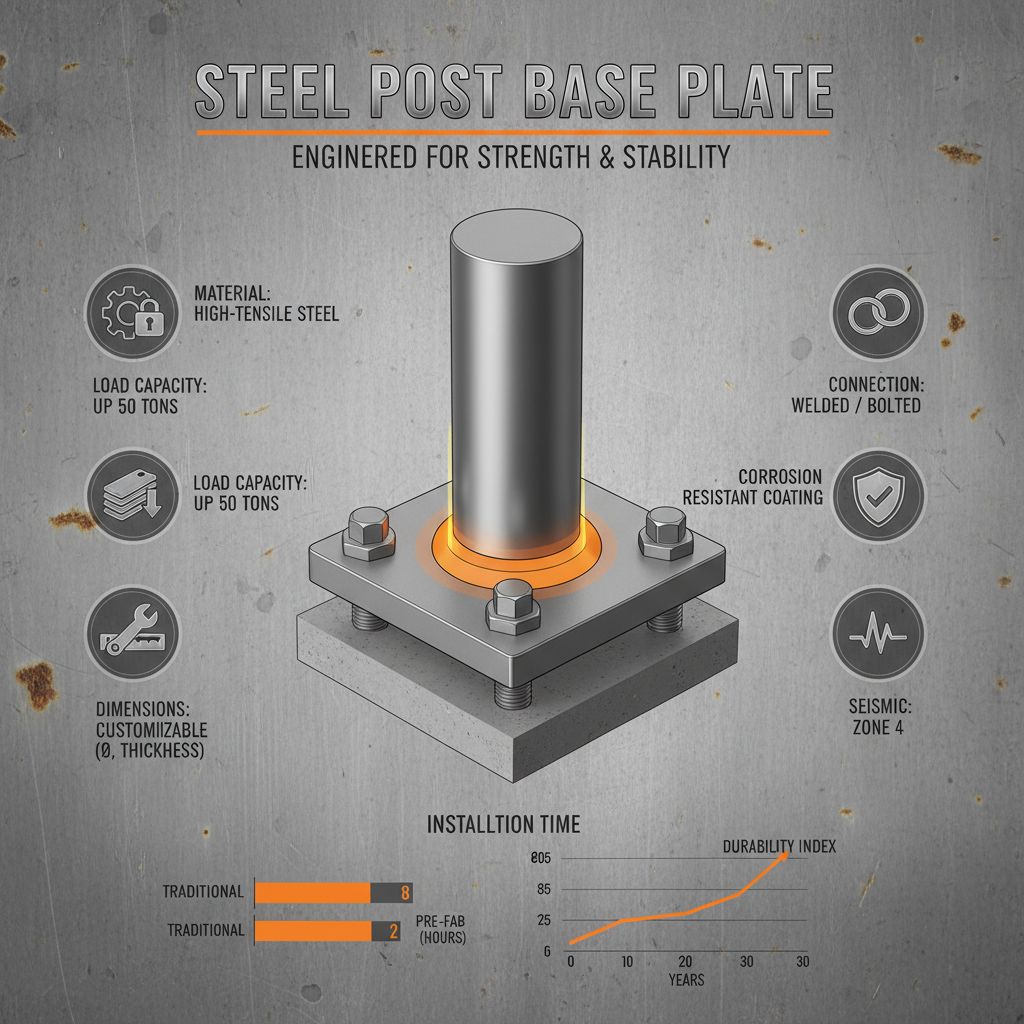
Sourcing High-Quality Base Plates
For reliable and durable base plates for steel posts, it's essential to partner with a reputable supplier. Hounda Floor offers a wide range of customizable base plates manufactured to stringent quality standards. We provide expert advice to help you select the optimal solution for your specific needs.
Conclusion: Invest in a Solid Foundation
Choosing the right base plate for steel post is a critical investment in the long-term stability and safety of your structures. By considering the factors outlined in this guide – type, material, installation best practices, and supplier reliability – you can ensure a robust and durable foundation for years to come.
Frequently Asked Questions (FAQs)
What load capacity should I consider when selecting a base plate?
Determining the load capacity is paramount. You need to account for both static loads (the weight of the post and any permanent attachments) and dynamic loads (wind, snow, vibrations, and any potential impact forces). Always overestimate the load to provide a safety margin. Refer to engineering calculations or consult with a structural engineer to accurately determine the required load capacity for your application. The base plate should be rated to handle the maximum anticipated load without exceeding its yield strength.
What are the best anchors to use with a base plate?
The best anchor type depends on the foundation material. For concrete, wedge anchors, sleeve anchors, or epoxy anchors are commonly used. For direct burial in soil, helical anchors or concrete footings with embedded anchor bolts are recommended. The anchor should be appropriately sized for the base plate thickness and the anticipated load. Ensure the anchors are installed correctly according to the manufacturer's instructions to maintain their holding capacity. A professional installer can ensure proper anchor selection and installation.
Can base plates be used in seismic zones?
Yes, base plates can be designed and installed for use in seismic zones. However, special considerations are required. Flanged base plates with larger surface areas and robust anchoring systems are typically used to resist seismic forces. The design must comply with local building codes and consider the soil conditions and potential ground movement. It is crucial to engage a structural engineer experienced in seismic design to ensure the base plate system meets the necessary requirements.
How important is corrosion protection for base plates?
Corrosion protection is extremely important, especially for outdoor applications. Steel base plates are susceptible to rust, which can weaken the structure over time. Galvanization, painting with corrosion-resistant coatings, or using stainless steel are effective methods to prevent corrosion. Regularly inspect the base plate for signs of rust and address any corrosion promptly to maintain its integrity and prolong its lifespan.


-

Premium China herringbone wood floor Technical Selection Guide The herringbone pattern has long been a symbol of architectural sophistication, characterized by its distinctive V-shape that adds dynamic movement and depth to any interior. When sourcing a China herringbone wood floor, professional buyers must look beyond the visual appeal to evaluate the structural integrity, material stability, and manufacturing precision that ensure long-term performance in diverse climates. In the current B2B landscape, the demand for patterned flooring is shifting toward hybrid solutions that combine the timeless look of natural timber with advanced composite technologies. This evolution is driven by the need for increased durability in high-traffic commercial zones Read More >26 Nov, 05
-

Waterproof China floating floorboards for Commercial Use Selecting a flooring solution that balances high-end architectural aesthetics with rigorous daily performance is a primary challenge for modern interior designers and commercial contractors. For those seeking the elegance of a herringbone layout without the instability of traditional hardwood, waterproof laminate options provide a strategic alternative. These engineered surfaces utilize a floating installation method, allowing the floor to expand and contract naturally without the need for permanent adhesives. By integrating a robust, waterproof HDF core with advanced wear layers, China floating floorboards offer a versatile solution for environments ranging from quiet residential bedrooms to high-traffic urban cafes. Read More >26 Nov, 02
-

Luxury Solid Wood Flooring: Answers for Material, Finish and Ordering Questions This FAQ explains the wood species, thicknesses, finishes, installation formats, moisture content, applications, and customization options available for luxury solid wood flooring from SHENYANG HOUNDA FLOOR PROCESSING CO.LIMITED. Read More >26 Nov, 02
-

Premium Quality China white oak stair treads for Luxury Stairs White oak is widely regarded as the gold standard for luxury staircases due to its exceptional hardness, tight grain structure, and timeless aesthetic. Selecting high-quality treads requires a deep understanding of both the botanical properties of the wood and the industrial precision used in their manufacture. This guide examines the technical requirements and sourcing considerations for professionals seeking premium staircase solutions. In the B2B procurement landscape, the challenge lies in balancing visual consistency with structural integrity. For contractors and designers, China white oak stair treads offer a strategic combination of European-grade precision and scaled manufacturing efficiency. Read More >26 Oct, 29
If you are interested in our products, you can choose to leave your information here, and we will be in touch with you shortly.


